
Cross-Docking vs. Warehousing: Which Does Your Business Need?
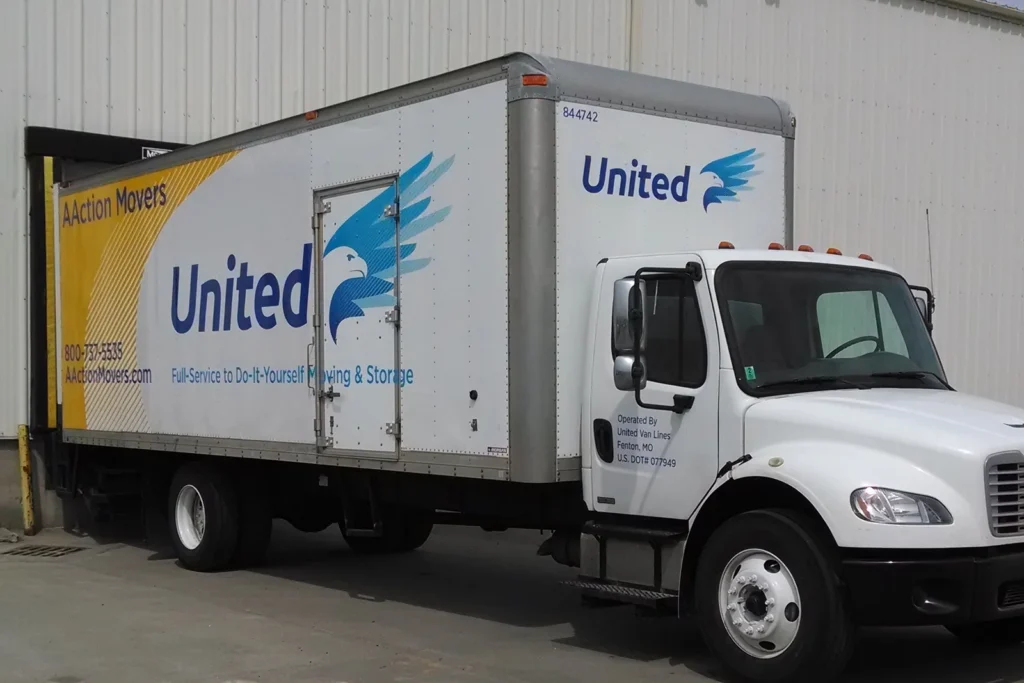
If your business ships products into North Dakota, South Dakota, Montana or Arizona, sooner or later you’ll face a logistics question: should freight pass straight through a cross-dock on its way to customers, or should inventory sit in a regional warehouse until it’s ordered? Both approaches put product closer to the people buying it, but they solve different problems. Choosing the right one, or the right mix, affects how fast you can deliver, how much inventory you carry and how your customers feel about the experience.
AAction Movers offers both warehousing and cross-docking at all four of our locations, in Bismarck, Minot, Rapid City and Mesa, and we connect both to our final-mile delivery service. Here’s a plain-English look at how each one works, when each makes sense, and the questions to ask before you decide.
What is cross-docking?
Cross-docking is a way of moving freight through a facility without storing it. Inbound shipments arrive at the dock, get unloaded, checked and sorted, then go out again on outbound trucks headed to their final destinations. The goal is to keep product moving. Instead of sitting on a shelf, it “crosses the dock” from the receiving side to the shipping side.
A typical example: a furniture retailer sends a full truckload from a distant distribution center to a regional facility. There, the load is broken down into individual customer orders, and those orders go out on local delivery trucks for home delivery. The freight takes one long, efficient trip into the region, followed by short, targeted trips to each customer.
When cross-docking makes sense
- The orders are already sold. If each item on the inbound truck already has a customer waiting for it, there’s little reason to store it.
- You want to consolidate long-haul freight. Sending one larger shipment into the region instead of many separate shipments can simplify your supply chain.
- Speed matters more than having stock on hand. Cross-docking keeps product moving toward the customer instead of waiting in storage.
- Your volume is steady and predictable. Regular inbound shipments tied to a delivery schedule are a good fit for a cross-dock flow.
What is warehousing?
Warehousing means holding inventory in a facility for a period of time, from days to months, until it’s needed. When a customer places an order, the product is pulled from the warehouse and sent out for delivery. Because the stock is already in the region, the trip to the customer is much shorter than shipping from a national distribution center.
A typical example: a manufacturer selling direct to consumers keeps a supply of its most popular products in a regional warehouse. When orders come in from Bismarck, Rapid City or Phoenix, those items can go out for local delivery without waiting on a long-haul shipment.
When warehousing makes sense
- Orders come in after the product arrives. If you sell from stock rather than shipping pre-sold orders, you need somewhere to hold that stock.
- You want shorter delivery times in the region. Inventory that’s already nearby can reach customers faster once it’s ordered.
- Demand is seasonal or uneven. A warehouse lets you build up stock ahead of a busy season instead of scrambling for freight when orders spike.
- You need a buffer. Weather, long distances and supply delays are a fact of life in the Northern Plains. Regional inventory gives you room to absorb a late inbound shipment without disappointing a customer.
Cross-docking vs. warehousing at a glance
- Time in the facility: Cross-docking is designed to move freight through quickly. Warehousing holds product until it’s ordered.
- Best for: Cross-docking suits pre-sold orders and consolidated inbound loads. Warehousing suits selling from stock and seasonal build-ups.
- Inventory you carry: Cross-docking keeps less product sitting in the region. Warehousing means carrying regional stock, in exchange for faster fulfillment.
- Planning required: Cross-docking depends on inbound shipments and delivery schedules lining up. Warehousing gives you more flexibility when they don’t.
Why many businesses use both
Cross-docking and warehousing aren’t either-or decisions. Many businesses use a cross-dock flow for special orders and large pre-sold shipments, and keep a smaller stock of fast-moving items in a regional warehouse. A retailer might cross-dock a truckload of customer furniture orders while holding a few best-selling mattresses or appliances in storage for quick delivery.
Having both options under one roof, with the same team handling delivery, makes it easier to adjust as your volume changes. You can start with cross-docking and add warehousing later, or shift product between the two as your sales patterns become clearer.
Why location matters in the Dakotas, Montana and Arizona
In a region as large as ours, the distance between your inventory and your customer drives a lot of the delivery experience. Customers in North Dakota, western South Dakota and eastern Montana are spread across cities, small towns and rural areas. Staging freight at a facility in the region shortens the final leg of every delivery.
That’s why our facilities and final-mile coverage are designed to work together:
- North Dakota: Our Bismarck headquarters and Minot office serve all of North Dakota, including Williston, which is served from Minot.
- Eastern Montana: Covered by our final-mile delivery network.
- Western South Dakota: Our Rapid City location serves Rapid City and the Black Hills region.
- Arizona: Our Phoenix/Mesa office serves the entire Phoenix metro area, backed by our 72,000 sq ft Mesa warehouse.
Questions to ask a cross-dock or warehouse partner
Whether you’re looking for a cross dock warehouse in North Dakota, South Dakota or the Phoenix area, these questions will help you compare providers:
- Do they offer both services? A partner with warehousing and cross-docking can change with you as your needs change.
- Where are their facilities? Make sure their locations are close to where your customers actually are.
- Can they handle the delivery too? When the same company receives, stores and delivers your freight, there are fewer handoffs.
- What equipment do they use? Large and heavy items need trucks with liftgates for safe loading and unloading at homes and businesses without a dock.
- How do they take orders? Find out whether they can work with orders sent by email or through a portal.
- What visibility do you get? Ask about delivery notifications, tracking and proof of delivery.
- How long have they been in business? Experience handling other people’s property carefully matters.
How AAction Movers supports your freight
We provide warehousing and cross-docking at all four of our locations and connect them to final-mile delivery across all of North Dakota, eastern Montana, western South Dakota and metro Phoenix. Our delivery fleet includes 26-foot liftgate trucks. Partners can send orders by email or through a portal, and we provide delivery notifications, tracking, and photo or signature proof of delivery, so you always know where your orders stand.
AAction Movers was founded in 1932 as Ted’s Transfer, has been an agent for United Van Lines since 1957 and has been veteran-owned since 1975. We’re an AMSA ProMover and operate under USDOT 212818. Beyond business logistics, we also handle commercial and office moves when your business itself needs to relocate.
Let’s talk about your freight
Not sure whether cross-docking, warehousing or a combination is the right fit? Tell us what you ship, where it’s coming from, where it needs to go and how quickly your customers expect it. We’ll help you work out an approach that fits. Request a quote or contact us. Our offices are open 8 AM to 5 PM, Monday through Friday.

